Glyphosate
The world's most-used herbicide; IARC (WHO) classifies it as "probably carcinogenic.

Invisible
Residues have no color, smell or taste. A clean-looking apple can still carry them.

The cocktail effect
One fruit can carry several pesticides at once. Safety limits are set one substance at a time.

Organic isn't residue-free
Drift from nearby fields, permitted organic sprays, transport and storage.

What a quick rinse leaves behind
See what happens to residues on your produce, and how Detoxer deals with them.


Built to stick
Many pesticides are designed to stay on leaves even through rain. That’s why a quick rinse under the tap often leaves them behind.

Hidden in crevices
Residues settle in pores, folds and around the stem, especially on grapes, strawberries and leafy greens, where water barely reaches.

Water plus active cleaning
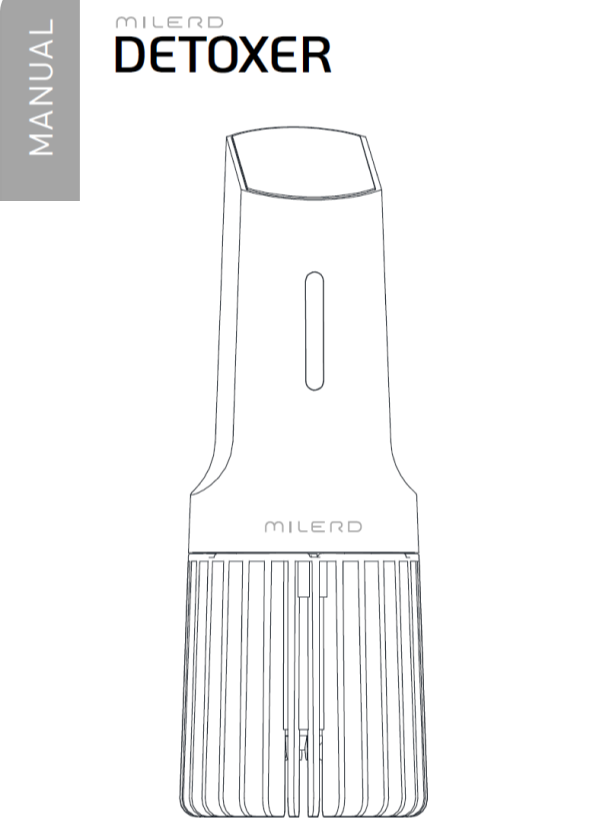
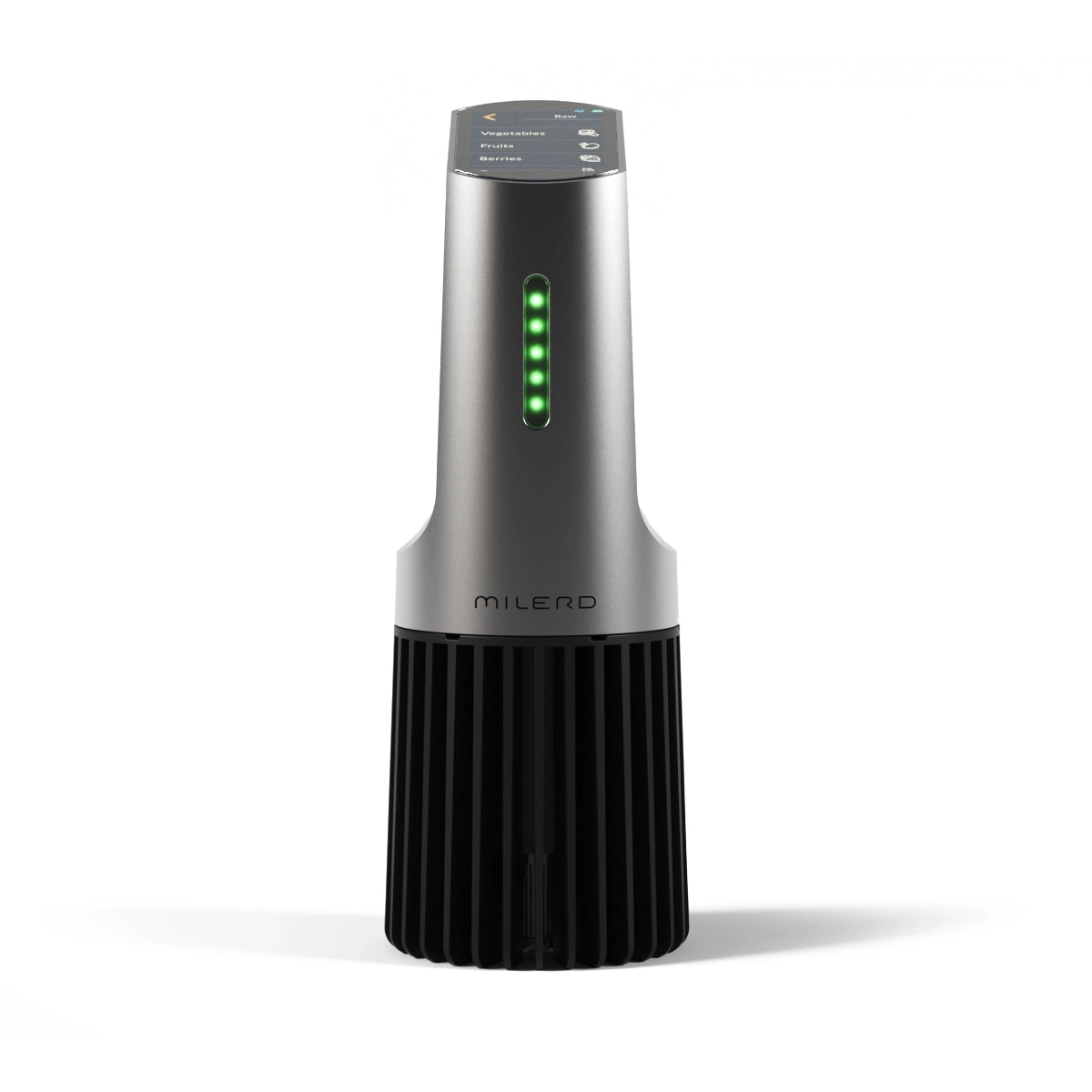
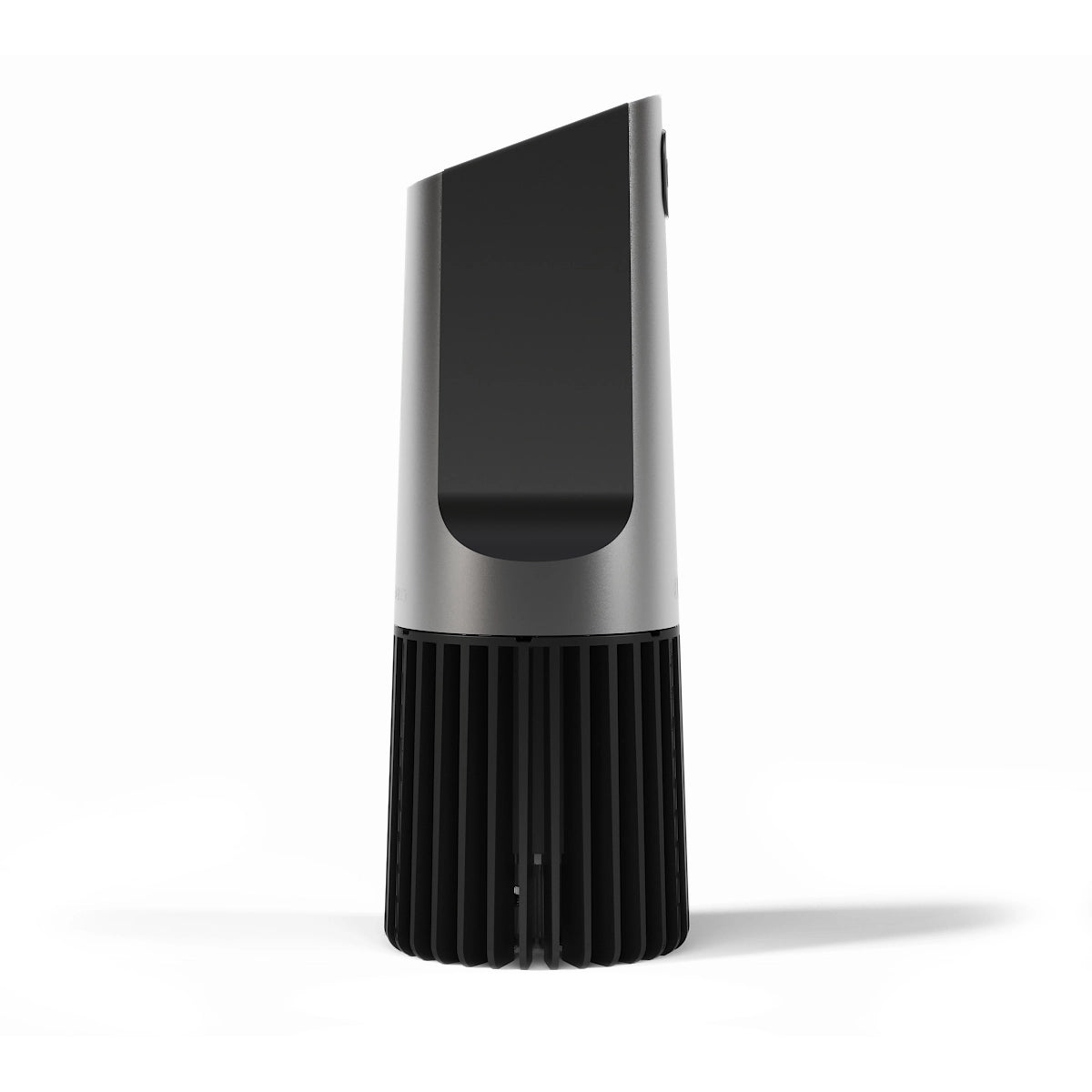
Detoxer adds active oxygen (ozone) and ultrasonic waves to plain water. Together they help loosen and break down surface residues in 5 minutes.
How Detoxer works
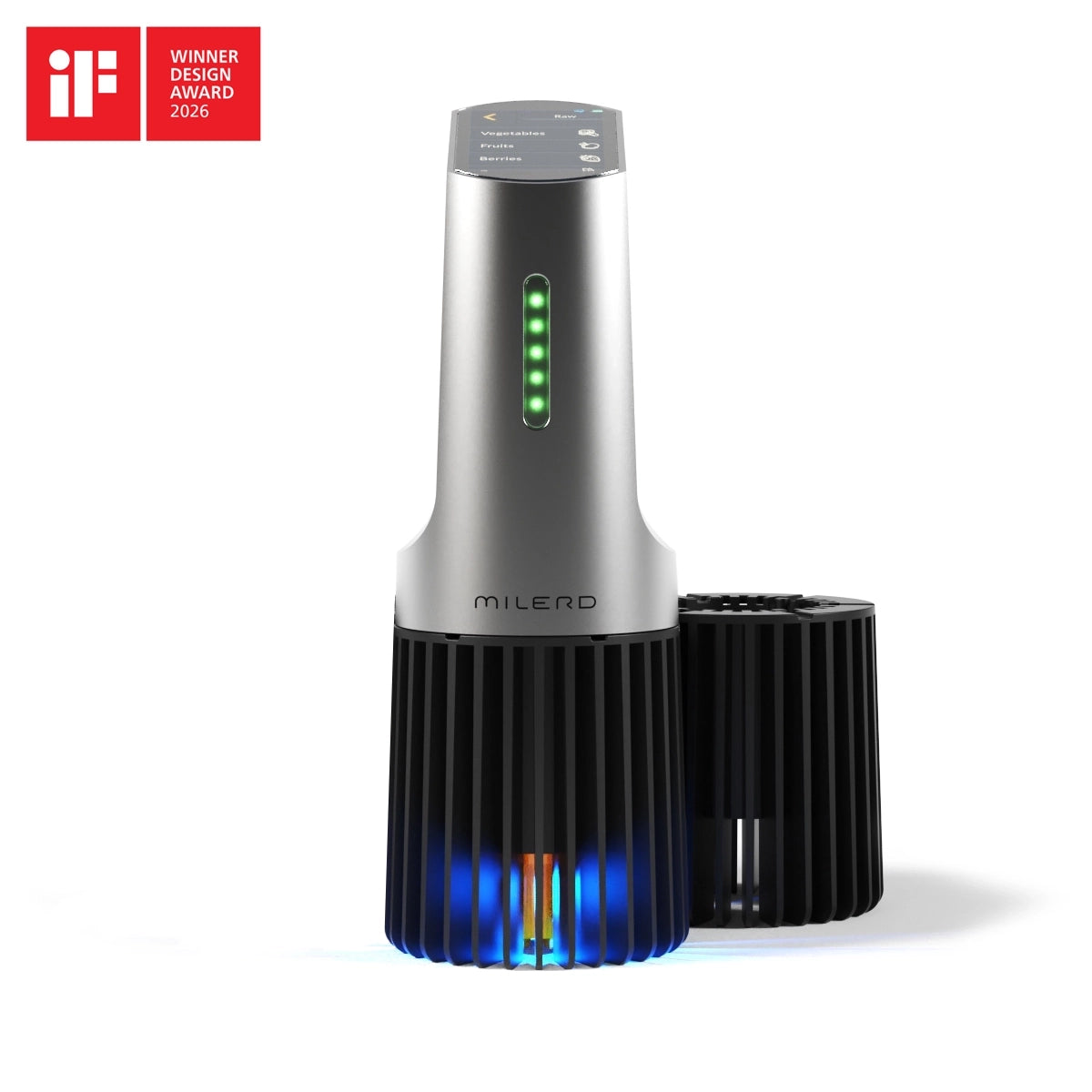


Choose your Detoxer
 Ultrasonic wavesOzone
 Ultraviolet light
5 minutes a day to reduce pesticide residues on everything you eat raw.
How to use Detoxer

1. Fill
Place your food in a bowl of clean water.

2. Add Detoxer
Place the device in the water and start the
5-minute treatment.
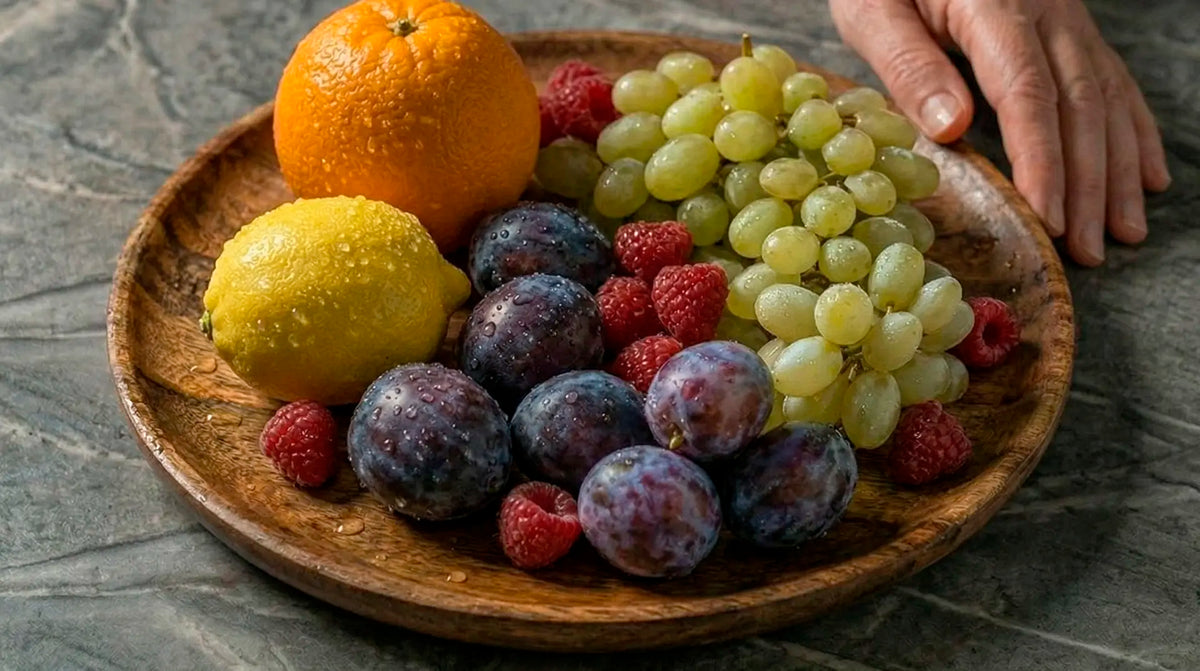
3. Let it clean
After the cycle is complete, unwanted contaminants and residues are reduced.

4. Enjoy the results
Visible residues in the water show what has been removed from your food.
Lab-tested results
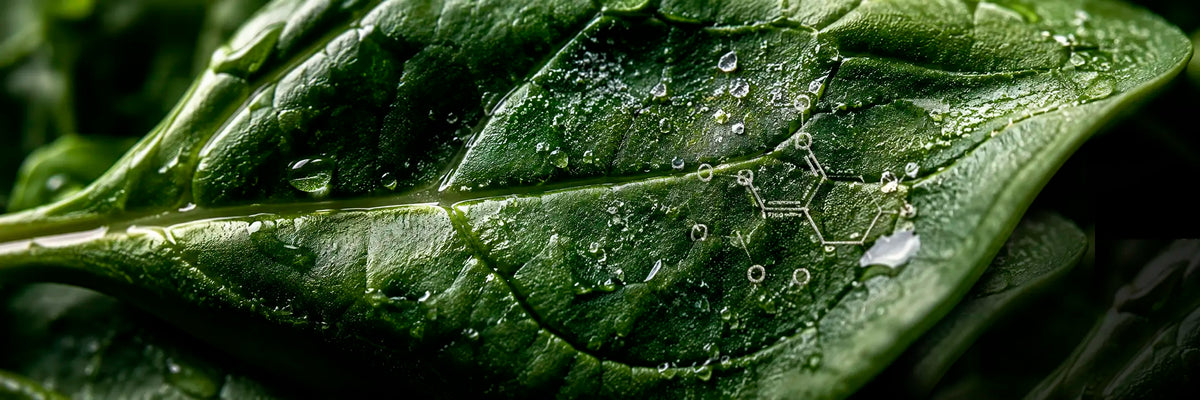
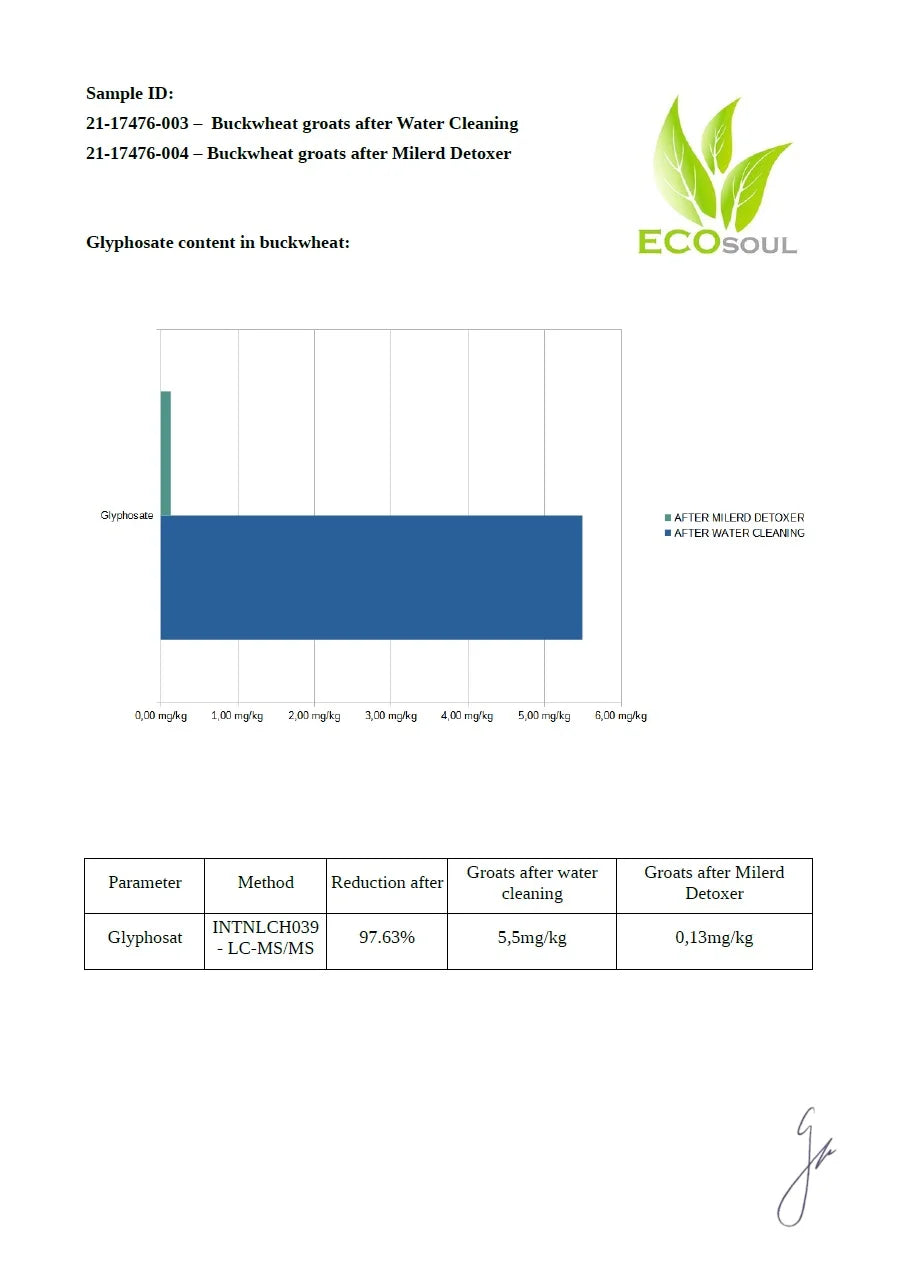
Glyphosate
97.6%↓
Learn more
The world's most widely used herbicide. Sprayed on crops during growing, it can remain on produce after harvest — ordinary rinsing does not always remove it. The WHO's cancer agency classifies it as probably carcinogenic to humans.
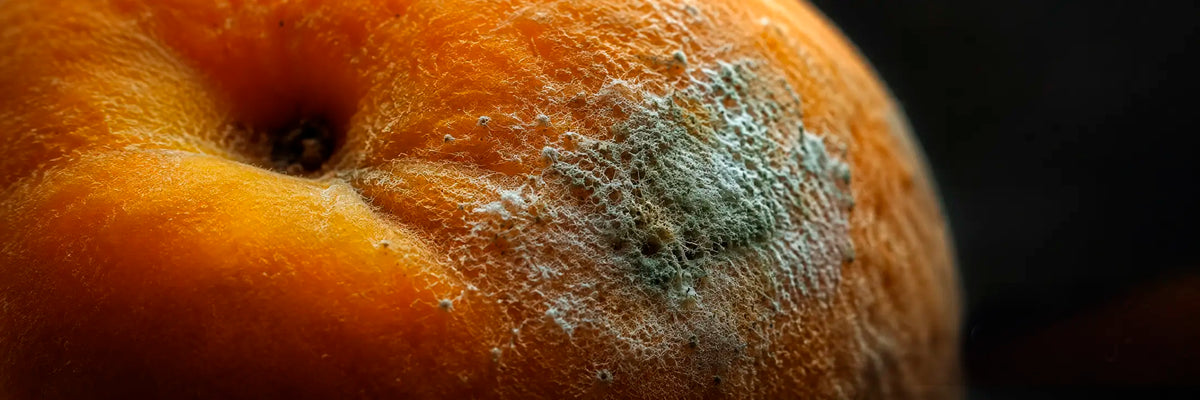
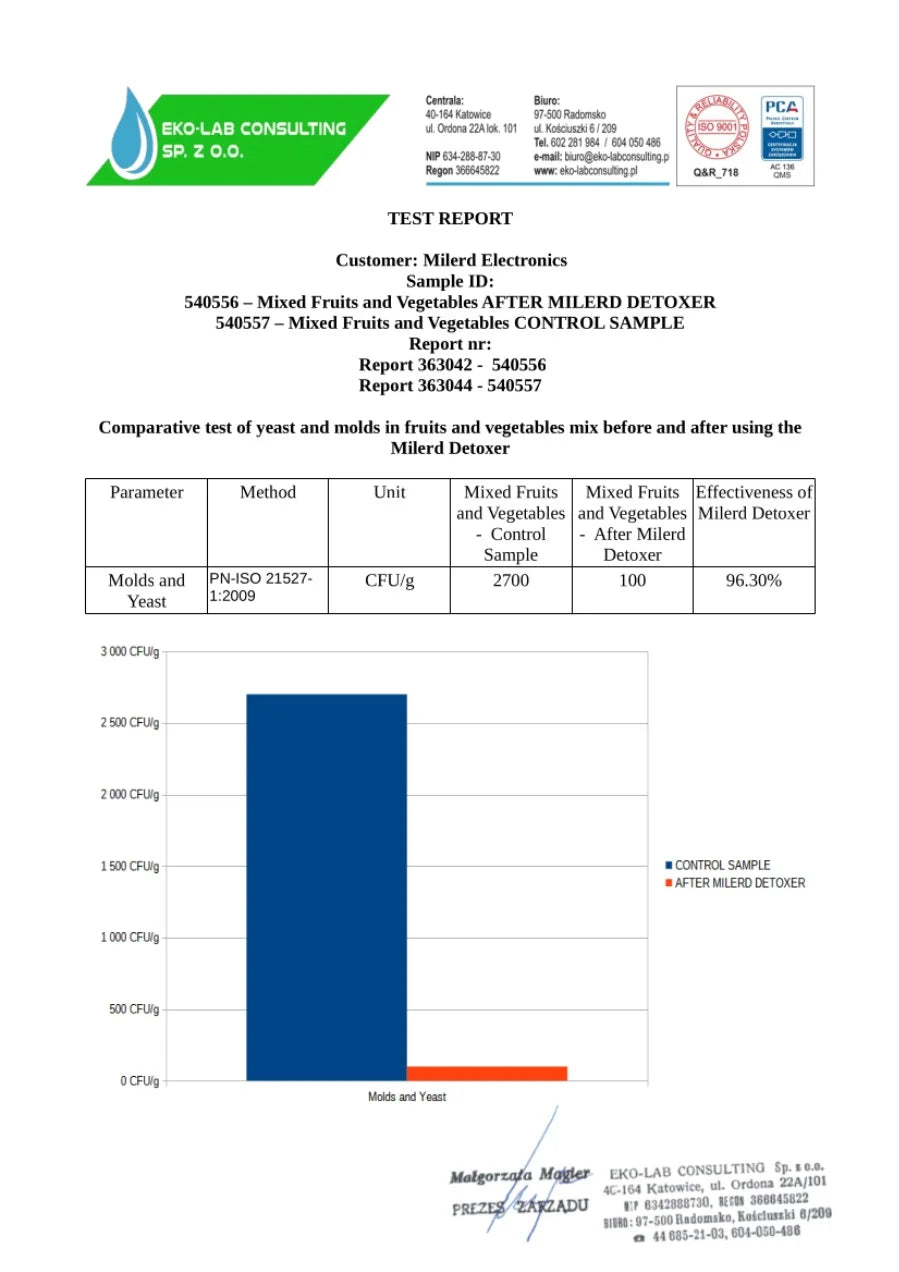
Molds & yeast
96.3%↓
Learn more
Common spoilage organisms that spread on fresh food. Some molds produce mycotoxins, which stay in the food even after the visible growth is gone. Aflatoxins, the most studied group, are linked to liver damage and are classified as carcinogenic to humans.
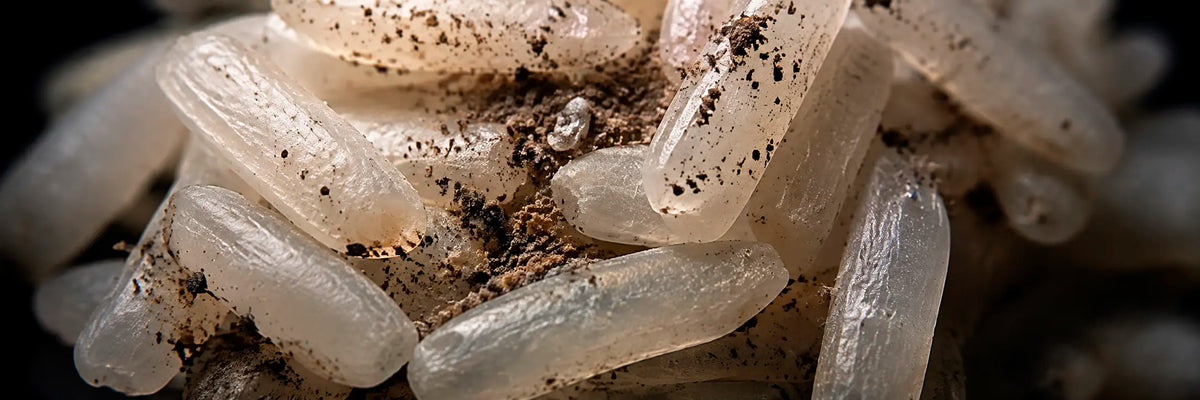
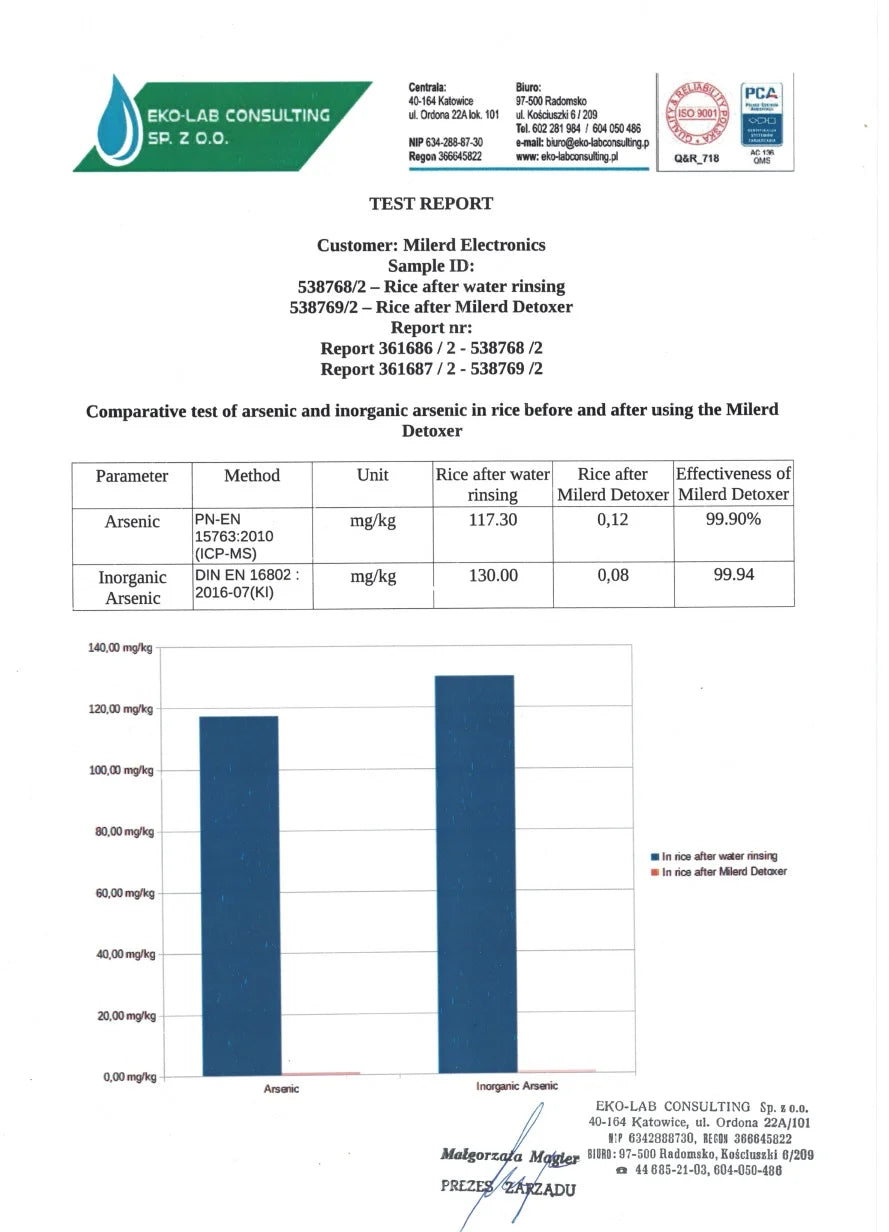
Arsenic
99.9%↓
Learn more
A naturally occurring element that crops take up from soil and water. It is invisible and tasteless. Long-term exposure to inorganic arsenic is associated with skin changes, cardiovascular disease and several cancers.
Video reviews
Order with confidence

Two devices. One smarter food safety system.
Use EcoTracker to check food quality before you buy, then Detoxer to clean what you bring home — a complete safety routine for everyday meals.
Frequently asked questions
Aren't pesticide residues on store-bought produce within legal limits anyway?
Most are. Regulators set maximum residue limits, and the majority of tested samples meet them. But limits are set one substance at a time, while a single fruit can carry several pesticides at once, and we eat produce every day. Reducing what's on the surface is a simple way to lower your everyday exposure, especially for children.
Isn't peeling enough?
Peeling removes part of the surface residues, but it also removes much of the fibre and vitamins that sit in or just under the skin. And many of the foods with the most residues, like strawberries, grapes, berries, spinach and kale, can't be peeled at all. Detoxer lets you clean them whole.
I buy organic. Do I still need Detoxer?
Organic produce typically carries fewer synthetic pesticide residues, but it isn't residue-free. Spray can drift from neighbouring fields, some pesticides are permitted in organic farming, and produce can pick up contaminants during transport and handling. Detoxer also helps reduce mold, yeast and surface bacteria, which affect organic and conventional produce alike.
Which foods benefit the most?
The ones you eat raw and unpeeled, especially the "Dirty Dozen": spinach, strawberries, kale, grapes, nectarines, peaches, cherries, apples, blackberries, pears, potatoes and blueberries. Leafy greens and berries have lots of folds and pores where residues settle and where rinsing doesn't reach.
Why isn’t regular washing enough to clean food properly?
Rinsing with water is a good first step, but it may not remove all residues. Many contaminants are not visible and can remain on the surface or in natural textures and crevices.
Detoxer combines active oxygen and ultrasonic waves to support a more thorough cleaning process — helping reduce residues that may remain after standard rinsing.
Does cleaning destroy vitamins or change the taste?
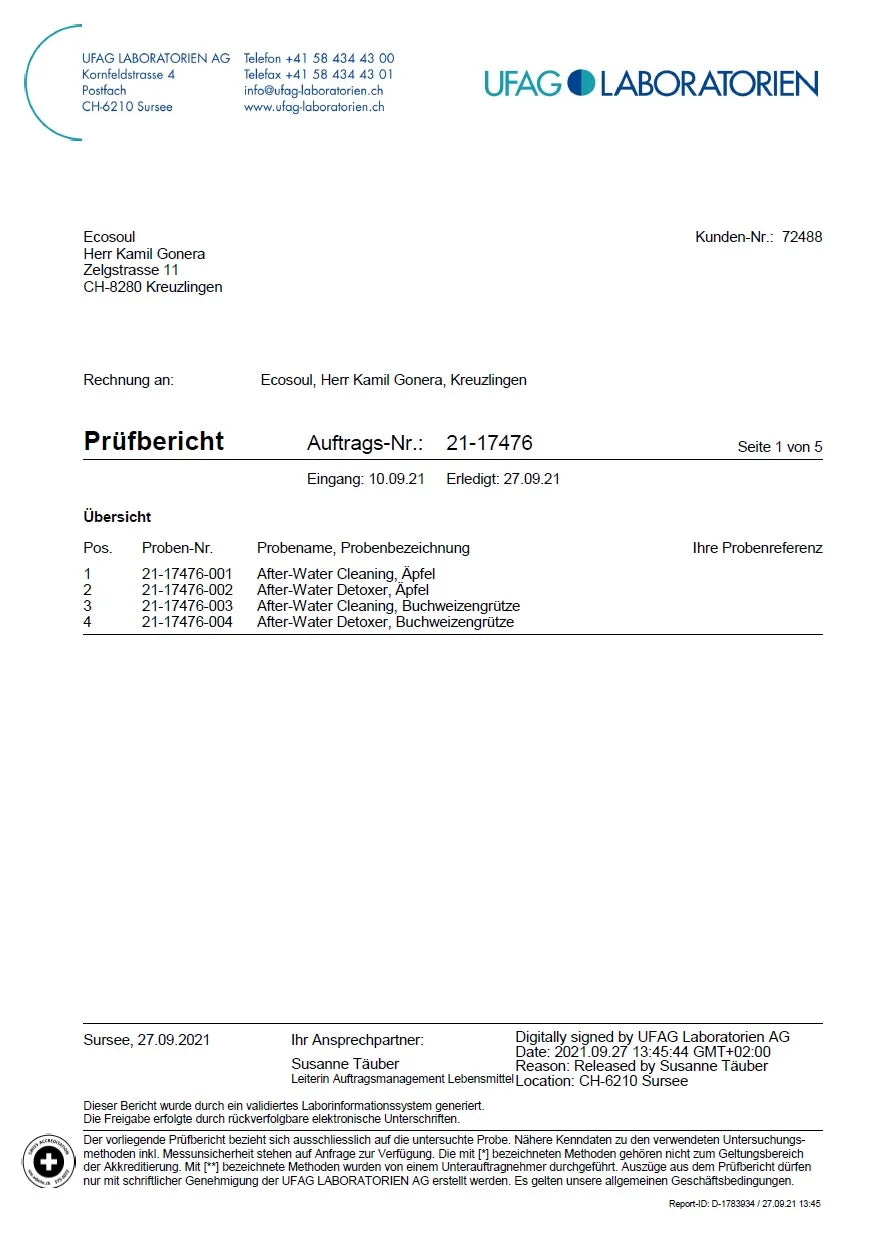
No. Detoxer cleans the surface in a short cycle of 5 to 10 minutes and doesn't heat or cook the food. Independent lab testing (ufag laboratorien) also checked vitamin and calcium levels after treatment [check: добавить результат из отчёта]. Taste and texture stay the same.
Do organic fruits and vegetables still need cleaning?
Yes. Even organic produce can be exposed to environmental contaminants during growing, transport, and handling. Factors such as wind, water, and contact with surfaces can all leave traces on food.
Cleaning remains an important step regardless of how food is sourced.
How is this different from washing with water, vinegar, or baking soda?
Water, vinegar, and baking soda are commonly used, but they rely on basic rinsing or manual preparation and may offer inconsistent results.
Detoxer is designed to work in a more controlled and consistent way, combining active oxygen and ultrasonic action — without the need for additional substances.
How do I know this actually works? Do you have proof or test results?
The cleaning process is based on technologies such as active oxygen, ultrasonic cavitation, and, in Detoxer 2, ultraviolet treatment, which are used in various industrial and water treatment applications.
In everyday use, some users also observe visible changes — such as cloudy water after cleaning — which can help illustrate what may be released from the surface.
How does the Detoxer work?
Detoxer uses a combination of active oxygen and ultrasonic waves in water. In Detoxer 2, ultraviolet light adds an additional treatment step as part of the overall cleaning cycle.
Active oxygen helps react with and support the breakdown of certain residues, while ultrasonic waves create microscopic bubbles that help dislodge particles from the surface and hard-to-reach areas. In Detoxer 2, UV light works alongside these technologies during operation.
Together, these processes support a more thorough cleaning routine.
Is ozone safe for home use and everyday cooking?
Yes, when used as part of a controlled process.
Ozone (O₃) is an unstable molecule that naturally breaks down into oxygen (O₂). In Detoxer, it is generated in water and used in a short, controlled cycle designed for everyday food preparation.
Does ozone remain on the food after cleaning?
No. Ozone naturally decomposes back into oxygen and does not remain on the food.
After the cycle, the food should be rinsed with clean water before use.
Is it suitable for everyday use in a family kitchen?
Detoxer is designed for regular use in a home kitchen, including family environments.
It uses water-based cleaning without added chemicals and is intended to support a more consistent food preparation routine.
What types of food can it be used for?
Detoxer can be used for a wide range of foods, including fruits, vegetables, berries, leafy greens, meat, fish, and grains.
It is suitable for both everyday ingredients and more delicate items.
Is it difficult to use, and do I need to add anything to the water?
No — the process is simple.
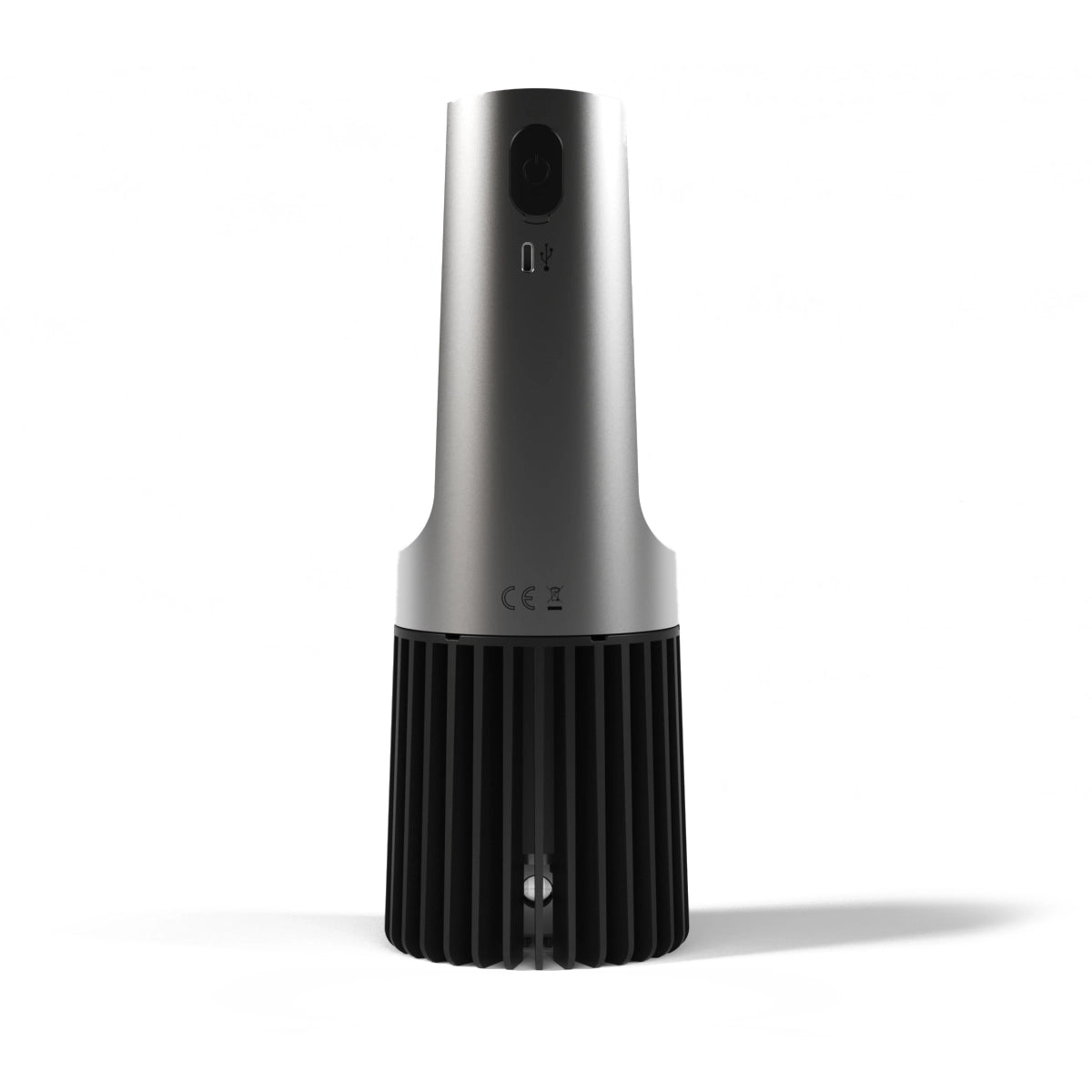
Place the food in a bowl of water, insert the device (ensuring the water level does not exceed the MAX mark on the device), and start the cycle. No chemicals or special solutions are required.
How long does the cleaning process take, and how often can I use it?
A typical cycle takes around 5–10 minutes, depending on the selected mode and type of food.
Detoxer can be used as often as needed — from occasional use to part of a daily routine.
Does it affect the taste, quality, or freshness of food?
Detoxer is designed to clean food without altering its natural taste or texture.
Some users also report that ingredients feel fresher after cleaning, particularly with produce such as berries and leafy greens.
What results should I expect after cleaning?
Results may vary depending on the type of food, but a common observation is that the water becomes cloudy after the cycle — especially when cleaning berries or leafy greens.
This can provide a visible indication that residues may have been released from the surface.
What’s the difference between Detoxer models and which one should I choose?
Different models may include variations in features, cleaning modes, and additional technologies such as UV treatment.
Choosing the right model depends on your usage preferences and how you plan to integrate it into your routine.
What are your shipping, warranty, and return conditions?
We offer shipping to select international destinations.
Duties, taxes, and customs charges may apply depending on the destination. In most cases, no additional charges apply, but in select countries import-related fees may arise upon delivery.
All devices are covered by a 1–2 year warranty, depending on the model, and we offer a 14-day return policy.
Learn more here.
Email: info@milerd.com