

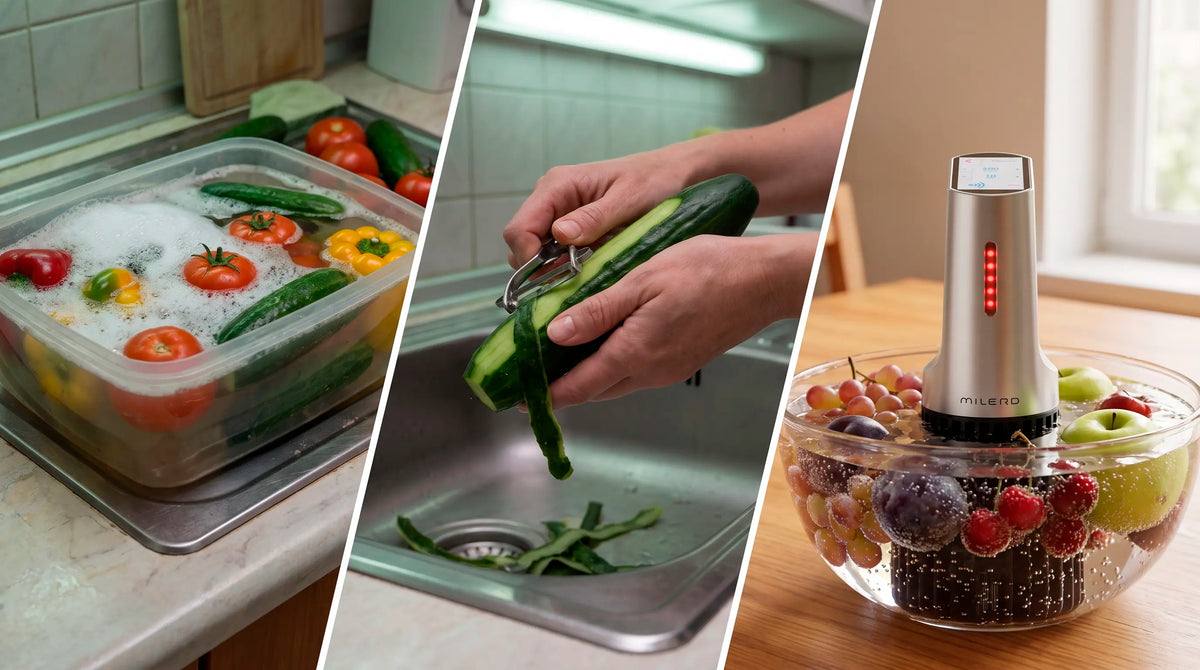
الإجابة المختصرة: لا يزيل الشطف السريع تحت الماء الجاري سوى نحو 30% من بقايا المبيدات في المتوسط. ويضاعف نقع المنتجات في محلول من صودا الخبز أو الخل هذه النسبة تقريبًا، لتصل إلى وسيط يقارب 51–54%، وفقًا لمراجعة أُجريت عام 2026 وشملت 47 دراسة. وأكثر الخيارات المنزلية فعالية هو منظف المنتجات بالموجات فوق الصوتية والأوزون مثل Milerd Detoxer، الذي خفّض الغليفوسات بنسبة 97.6% في الاختبارات المختبرية، خلال دورة مدتها 5–10 دقائق باستخدام الماء فقط. لا تزيل أي طريقة المبيدات بنسبة 100%، لأن بعضها يتغلغل إلى ما تحت القشرة.
مقارنة طرق إزالة المبيدات
| الطريقة | خفض المبيدات | المدة | الأنسب لـ | القيود |
|---|---|---|---|---|
| الشطف تحت الماء الجاري | ~30% (الوسيط) | < دقيقتين | المنتجات الصلبة والأوساخ اليومية | تتراوح النتائج بين 0% و94%؛ وفعاليته محدودة على القشور الشمعية وفي الشقوق |
| النقع في ماء عادي | ~34% (الوسيط) | 5–20 دقيقة | الخضروات الورقية | أفضل قليلًا فقط من الشطف |
| النقع في بيكربونات الصوديوم | ~51% (الوسيط) | 12–15 دقيقة | التفاح والفواكه الصلبة | يتطلب نقعًا طويلًا؛ وأقل فعالية مع البقايا التي تتغلغل في القشرة |
| النقع في الخل | ~54% (الوسيط) | 10–20 دقيقة | معظم المنتجات | قد يؤثر في مذاق المنتجات الرقيقة؛ وتختلف النتائج باختلاف المبيد |
| التقشير | يزيل البقايا السطحية والقريبة من السطح | — | التفاح والجزر والبطاطا | يفقد الألياف والعناصر الغذائية؛ وغير مناسب للتوتيات والخضروات الورقية |
| منظفات المنتجات التجارية | لم يثبت أنه أفضل من الماء | 1–5 دقائق | — | تقول إدارة الغذاء والدواء الأمريكية إن الصابون أو منظف المنتجات غير ضروري |
| منظف بالموجات فوق الصوتية والأوزون (Milerd Detoxer) | 97.6% من الغليفوسات (اختبار مختبري) | 5–10 دقائق | التوتيات والخضروات الورقية وجميع المنتجات واللحوم والأسماك | شراء لمرة واحدة؛ اشطف الطعام بعد انتهاء الدورة |
أرقام الماء وصودا الخبز والخل هي الوسيطات المستخلصة من مراجعة استكشافية أُجريت عام 2026 وشملت 47 دراسة محكّمة تناولت 23 نوعًا من المنتجات و79 مبيدًا (Frontiers in Environmental Health). أما رقم Detoxer فيستند إلى اختبارات مختبرية للجهاز؛ وروابط التقارير أدناه. وتعتمد النتائج الفردية على المبيد والمنتج ومستوى التلوث.
لماذا يصعب غسل المبيدات
صُممت مبيدات كثيرة لتلتصق بالنباتات وتقاوم المطر، لذا ينساب الماء فوقها وحده. وتتغلغل بعض المبيدات إلى الداخل: ففي دراسة أجرتها جامعة ماساتشوستس، نفذ مبيد الفطريات ثيابيندازول إلى عمق يصل إلى 80 ميكرومترًا داخل قشرة التفاح، ولذلك كان نزعه أصعب من نزع مبيد بقي قريبًا من السطح. وتحتجز التوتيات والخضروات الورقية والمنتجات ذات القشور الشمعية أو الملمس المحبب بقايا المبيدات في المسام والشقوق التي لا يصل إليها الشطف السريع.
كيفية استخدام كل طريقة
الشطف بالماء
افرك المنتجات تحت ماء جارٍ بارد لمدة 30–60 ثانية؛ وافرك المنتجات الصلبة مثل البطاطا والخيار بفرشاة نظيفة. جففها بمنشفة نظيفة. هذا هو الحد الأدنى الذي توصي به إدارة الغذاء والدواء الأمريكية لسلامة الغذاء.
النقع في بيكربونات الصوديوم
أذب نحو 10 غرامات (ملعقتين صغيرتين) من بيكربونات الصوديوم في كل لتر من الماء، لتحضير محلول بتركيز 1%. انقع المنتجات الزراعية لمدة 12–15 دقيقة، ثم اشطفها بماء نظيف. وفي دراسة جامعة ماساتشوستس أمهرست، أزالت هذه الطريقة 80% من الثيابندازول و96% من الفوسمت من التفاح، وهي نسبة أعلى بكثير مما يزيله الشطف لمدة دقيقتين.
النقع في الخل
اخلط مقدارًا من الخل الأبيض مع ثلاثة إلى أربعة مقادير من الماء، وانقع الطعام لمدة 10–20 دقيقة، ثم اشطفه جيدًا. تجنب نقع التوت الطري طويلًا، إذ قد يمتص طعم الخل.
منظف بالموجات فوق الصوتية والأوزون
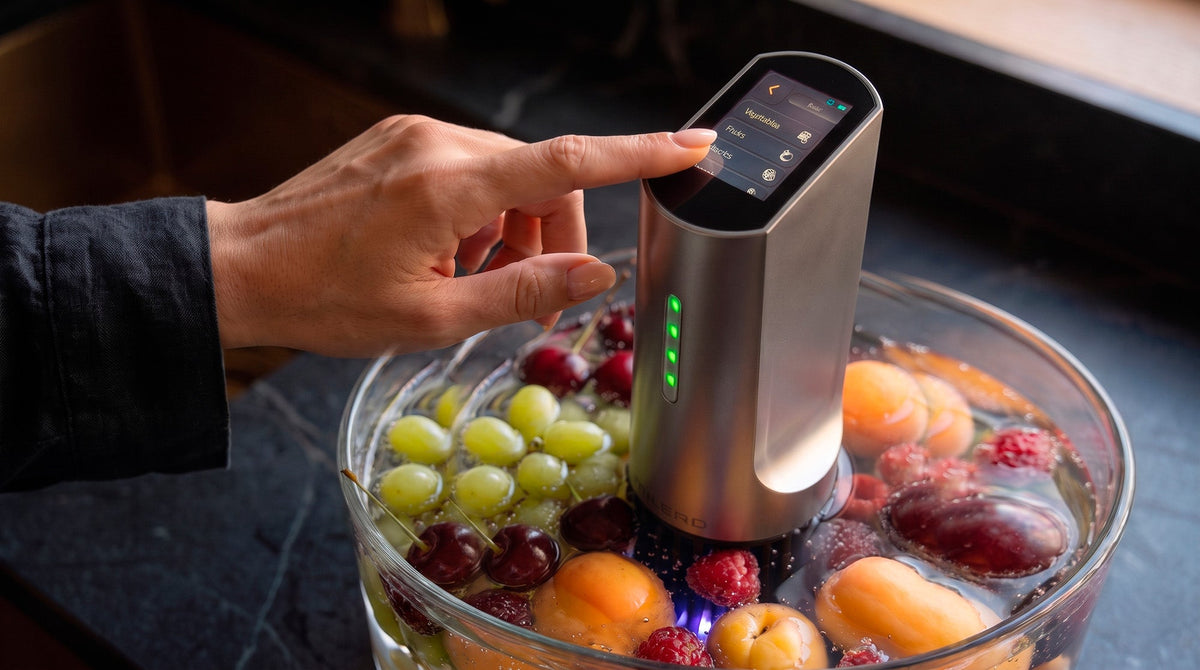
ضع المنتجات الزراعية في وعاء ماء، ثم ضع الجهاز فيه، واختر نوع الطعام وابدأ الدورة. تُنشئ الموجات فوق الصوتية فقاعات مجهرية تنهار وتفكك البقايا من المسام والشقوق؛ ويؤكسد الأوزون البقايا على السطح، ثم يتحول مجددًا إلى أكسجين عادي. اشطف الطعام بعد انتهاء الدورة. لا حاجة إلى مواد كيميائية أو نقع طويل، ما يجعل الجهاز عمليًا للاستخدام اليومي.
 Milerd Detoxer: خيار التنظيف بالموجات فوق الصوتية، مع نتائج مخبرية
جهاز Milerd Detoxer منظف لاسلكي للطعام بالموجات فوق الصوتية والأوزون، مخصص للفواكه والخضروات والتوت والخضراوات الورقية واللحوم والأسماك والحبوب. صممته Milerd وصنعته، واختُبر في مختبرات سويسرية، وفاز بجائزة iF DESIGN AWARD 2026.
| الملوِّث | نسبة الخفض | تقرير المختبر |
|---|---|---|
| الغليفوسات (أكثر مبيدات الأعشاب استخدامًا) | 97.6% | |
| العفن والخمائر | 96.3% | |
| الزرنيخ | 99.9% | |
| المبيدات والفيتامينات والكالسيوم (مختبرات UFAG، سويسرا) | الحد من المبيدات؛ والتحقق من الحفاظ على العناصر الغذائية |
يتوفر طرازان. يجمع Detoxer بين الموجات فوق الصوتية والأوزون، مع برامج مخصصة لأنواع الطعام. ويضيف Detoxer 2 الأشعة فوق البنفسجية، وإمكانية ضبط شدة الأوزون مع وضع خالٍ من الأوزون، وبرنامجًا مضادًا للطفيليات.
أي طريقة ينبغي أن تختار؟
- للغسل من حين لآخر وللمنتجات الزراعية الصلبة: يُعد النقع في بيكربونات الصوديوم أفضل خيار مجاني إذا كان لديك 15 دقيقة.
- التوت والعنب والخضراوات الورقية والأعشاب: تحتجز هذه الأطعمة البقايا، ولا يمكن تقشيرها أو فركها؛ ويصل المنظف بالموجات فوق الصوتية إلى الشقوق من دون إتلافها.
- للعائلات التي تغسل المنتجات الزراعية يوميًا: يوفّر الجهاز نتائج متسقة خلال 5–10 دقائق، من دون الحاجة إلى قياس المحاليل.
- إذا كنت قلقًا أيضًا من العفن أو المعادن الثقيلة، وليس المبيدات وحدها: فاختر جهازًا تتوفر نتائج مختبرية منشورة بشأن تلك الملوثات.
الأسئلة الشائعة
هل يزيل غسل الطعام بالماء المبيدات؟
إلى حد ما. وجدت مراجعة لـ47 دراسة أن الشطف بالماء يزيل نسبة وسطية تبلغ نحو 30% من بقايا المبيدات، مع تفاوت النتائج بين ما يقارب الصفر و94%، بحسب المبيد ونوع المحصول.
أيهما أفضل لإزالة المبيدات: صودا الخبز أم الخل؟
تؤدي الطريقتان أداءً متقاربًا: أزال النقع في الخل نحو 54% من البقايا في المتوسط، وأزالت صودا الخبز نحو 51%، وفقًا لمراجعة عام 2026. وكلاهما أكثر فعالية من الماء وحده، لكنهما يتطلبان النقع لمدة 10–15 دقيقة.
هل تعمل أجهزة تنظيف الفواكه والخضروات بالموجات فوق الصوتية فعلًا؟
يفكك التنظيف بالموجات فوق الصوتية البقايا من المسام والشقوق بفعل التجويف، ويؤكسد الأوزون البقايا الموجودة على السطح. وفي الاختبارات المخبرية، خفّض Milerd Detoxer الغليفوسات بنسبة 97.6% والعفن والخمائر بنسبة 96.3% والزرنيخ بنسبة 99.9%. عند اختيار جهاز، ابحث عن تقارير مختبرية منشورة بدلًا من الادعاءات التسويقية.
ما أفضل جهاز لتنظيف الفواكه والخضروات؟
ابحث عن ثلاثة أمور: تقنية الموجات فوق الصوتية مع الأوزون، ونتائج مختبرية مستقلة لملوثات محددة، وتصميم لاسلكي يمكنك استخدامه في أي وعاء. يفي Milerd Detoxer بهذه الشروط الثلاثة، مع انخفاضات مختبرة مخبريًا في الغليفوسات (97.6%) والعفن (96.3%) والزرنيخ (99.9%)، ودورة تستغرق 5–10 دقائق وتستخدم الماء فقط.
هل الأوزون آمن لغسل الطعام؟
يتحلل الأوزون المستخدم خلال دورة قصيرة ومضبوطة في الماء إلى أكسجين عادي، ولا يبقى على الطعام. اشطف الطعام بالماء النظيف بعد ذلك. ويوفر Milerd Detoxer 2 أيضًا وضعًا خاليًا من الأوزون.
هل ينبغي تقشير الفواكه والخضروات لتجنب المبيدات؟
تزيل عملية التقشير البقايا السطحية وبعض ما نفذ إلى القشرة، لكنها تزيل أيضًا الألياف والعناصر الغذائية، ولا يمكن تطبيقها على التوت أو العنب أو الخضروات الورقية.
هل يجب غسل الفواكه والخضروات العضوية؟
نعم. فقد تحتوي المنتجات العضوية على بقايا مبيدات عضوية معتمدة، أو بقايا انجرفت من مزارع مجاورة، أو أتربة ومياه، أو بقايا ناتجة عن التداول.
هل تعمل مستحضرات غسل المنتجات الزراعية التجارية؟
تقول إدارة الغذاء والدواء إنه لا حاجة لاستخدام الصابون أو غسول المنتجات الزراعية؛ فالشطف تحت الماء الجاري هو توصيتها الأساسية. ولإزالة المزيد، يكون النقع أو التنظيف بالموجات فوق الصوتية أكثر فعالية.
المصادر
- الحد من بقايا المبيدات على المنتجات الزراعية: مراجعة استكشافية لأساليب غسل المنتجات الزراعية المنزلية — Frontiers in Environmental Health، 2026
- فعالية مواد التنظيف التجارية والمنزلية في إزالة بقايا المبيدات من التفاح وداخله — مجلة الكيمياء الزراعية والغذائية، 2017
- 7 نصائح لتنظيف الفواكه والخضروات — إدارة الغذاء والدواء الأمريكية
- تقارير مختبر Milerd Detoxer — الروابط في الجدول أعلاه

اترك تعليقًا
This site is protected by hCaptcha and the hCaptcha Privacy Policy and Terms of Service apply.