

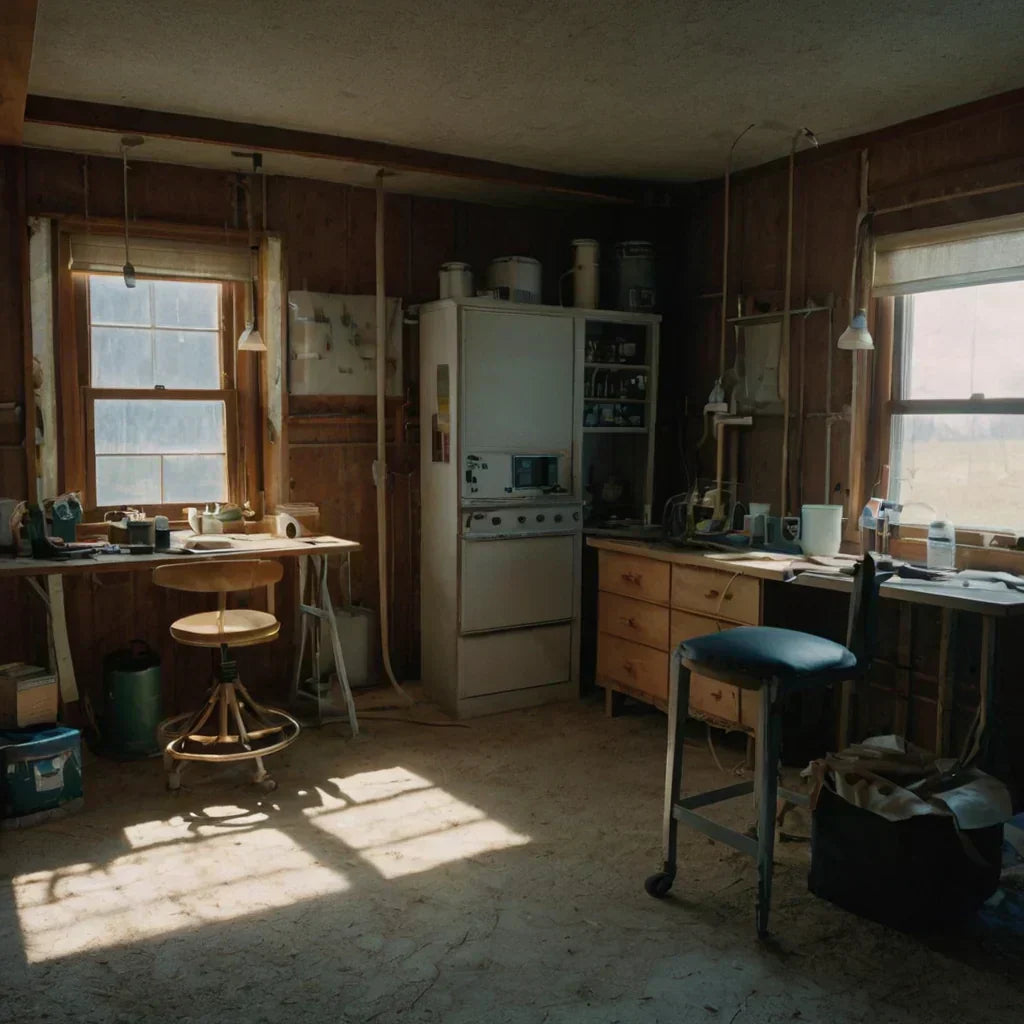
Where should a radon test be placed? For the most accurate results, placement is crucial. In this guide, we’ll show you the best spots in your home to ensure reliable readings.
Key Takeaways
-
Place radon test kits in central, frequently occupied areas of the home, avoiding high-humidity locations for accurate readings.
-
Conduct testing in the lowest livable level of the home, typically the basement or ground floor, to assess radon infiltration effectively.
-
Understand and act on your radon test results: levels above 4.0 pCi/L necessitate professional mitigation to ensure a safe living environment.
Ideal Locations for Radon Test Kits

When it comes to testing for radon, location is everything. Radon test kits should be placed in open, central locations where people frequently spend their time. Think about the living room or family room—places where the air quality directly impacts your daily life. This strategic placement ensures that the readings you get are representative of the air you and your family breathe most often.
In larger homes, using multiple radon test kits becomes even more critical. Placing detectors in various areas provides a comprehensive understanding of your home’s radon levels. This is particularly important in multi-story homes, where radon levels can vary significantly from one floor to another. For instance, the basement might have higher radon levels compared to the upper floors, so testing multiple locations is crucial.
Avoid placing radon test kits in areas with high humidity, such as laundry rooms. High humidity can interfere with the accuracy of the test results, leading to erroneous readings. Carefully selecting the placement of your radon test kits ensures the most reliable data.
Lowest Livable Level Testing

Conducting radon testing in the lowest area of your home is vital for accurate assessment. This is typically the basement or ground floor, as these areas are most susceptible to radon infiltration. Since radon enters homes through openings at ground level, testing these vulnerable areas first is essential because:
-
They are the lowest livable areas where radon accumulates.
-
Radon infiltration is most likely through openings at ground level.
-
Testing these areas provides the most accurate assessment of radon levels.
Basements and ground floors are particularly critical for radon testing because they are closest to the source of radon entry. If you have a finished basement that your family uses regularly, it’s the perfect place to conduct your first test.
Conduct radon tests under normal living conditions. This means avoiding kitchens and bathrooms, as these areas can introduce variables that skew the results.
Avoiding Exterior Walls and Windows
Avoid placing radon test kits near exterior walls or windows to ensure accurate results. These locations can be easily influenced by outside air, which can distort the readings. Position your test kits at least 12 inches away from any walls for reliable data.
Keep kits away from drafts, heating vents, and direct sunlight—all factors that can affect accuracy.
Height and Positioning of Test Kits
The height of your radon test kits significantly impacts the accuracy of results. Place these kits between 2 to 7 feet above the floor for optimal readings.
This placement ensures that the detector captures air from the breathing zone of occupants.
Preparing Your Home for Radon Testing

Properly preparing your home before radon testing ensures accurate results. Maintain closed-house conditions for at least 12 hours before starting the test. Keep exterior doors and windows closed to prevent outdoor air from altering radon levels.
-
Avoid extreme weather during testing.
-
Choose a day without strong winds or heavy rain.
-
Maintain consistent indoor conditions.
Using the Aero Q4 and Aero Q8 for Accurate Radon Monitoring
Introducing the Aero Q4 and Aero Q8, state-of-the-art devices designed for precise radon monitoring. Key features include:
-
Real-time radon concentration measurement
-
Compact, user-friendly design
-
Detailed long-term statistics
The Aero Q4 and Aero Q8 provide continuous monitoring, alerting you when levels exceed safe limits.
Placement of the Aero Q4 and Aero Q8
Place these devices in areas with consistent airflow, away from obstructions. They should be positioned at least three feet above the ground for accurate detection.
Understanding Your Radon Test Results

Radon levels guide your next steps:
-
Below 1.3 pCi/L — safe, continue periodic monitoring.
-
1.3–2.6 pCi/L — acceptable, monitor regularly.
-
2.7–4.0 pCi/L — improve ventilation, then retest.
-
Above 4.0 pCi/L — mitigation required.
Next Steps After Testing
If high radon levels are detected, install a mitigation system. Sub-slab depressurization is the most effective solution and typically costs between $1,000 and $2,000.
Summary
Proper placement of radon test kits is essential for obtaining accurate readings. The Aero Q4 and Aero Q8 offer reliable continuous monitoring to help maintain a safe indoor environment.

Taking proactive steps to test and mitigate radon levels protects both your health and your home. Start testing today to ensure clean, safe indoor air.



Lasă un comentariu
Acest site este protejat de hCaptcha și hCaptcha. Se aplică Politica de confidențialitate și Condițiile de furnizare a serviciului.